
A dry listing can hide a wet chimney
Houses in Torrance tend to go on the market in spring and summer, when it has not rained for weeks. Every ceiling looks clean. Fresh paint covers whatever stain the last storm left. The chimney looks solid from the driveway. Then the first winter rain arrives after closing, and the new owner finds a ring on the ceiling beside the fireplace that nobody mentioned.
This post is for buyers and sellers who want to avoid that. It covers why a sale is a reason for a deeper chimney inspection, what that inspection finds about water in particular, and how the findings get used in the deal.
Why a sale changes the inspection level
The fire safety standard most chimney work in California follows, NFPA 211, defines three depths of inspection. The middle one, Level 2, is the one it asks for when ownership of a property changes. The logic is simple: a buyer is taking on a chimney whose history they do not know, and the only way to see its inside is to send a camera up it.
The lighter Level 1 suits a chimney whose owner has used it the same way for years and simply wants a yearly look. It does not see the full flue. For a house changing hands, that gap is where the expensive surprises live.
Our Level 2 inspection is $390 per chimney. Level 1 is $54, and we will tell you plainly if a sale is better served by the camera.
Where old water damage hides
Our work starts from one question: where has water been? In a sale inspection we look for evidence that outlasts the weather:
- Inside the flue. The camera shows tide marks, white mineral deposits and open joints between flue tiles. Water carrying through those joints soaks the brick and, over time, the framing beside it.
- The damper and smoke shelf. Rust scale, a damper rusted half shut, or debris washed down onto the shelf all point to rain getting in at the top.
- The attic. Dark streaks on the framing beside the chimney, compressed or stained insulation, and old drip marks on the ceiling below. These are often the clearest proof of a long-running leak, and they survive any amount of fresh paint in the living room.
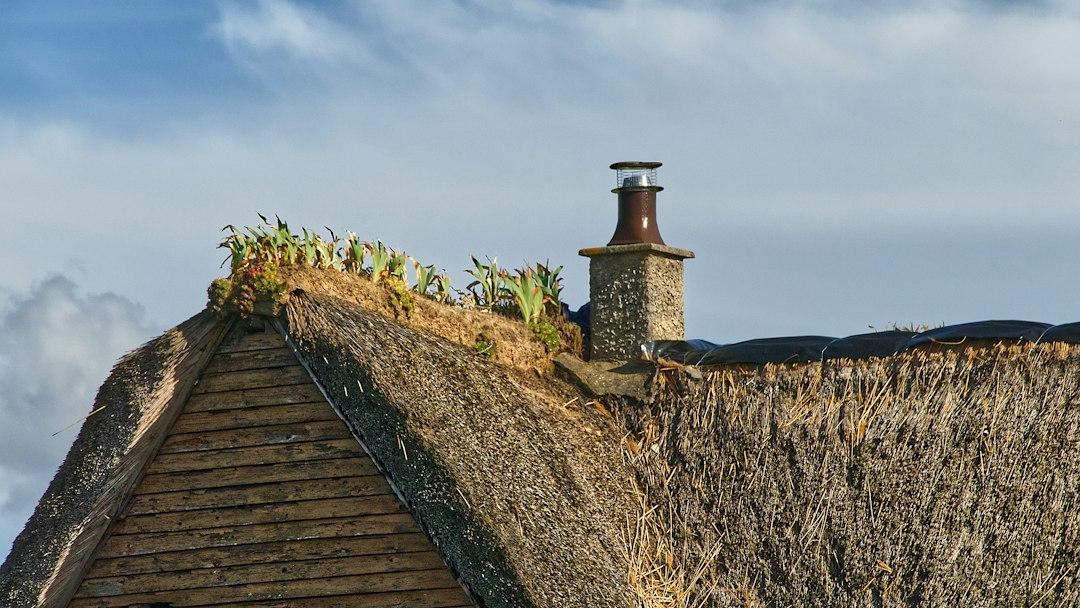
- The roof. The crown, the cap, the flashing and the upper brick. Each opening we find is photographed and linked to the inside mark it caused.
- Repairs that hide more than they fix. A fresh smear of sealant along the flashing, a new coat of paint on a ceiling patch, or a crown skimmed over with mortar. None of these is wrong in itself, but each tells us water was a problem recently.
Seller or buyer: who should book first?
A seller who books before listing gets to see the findings while there is still time to fix them on their own schedule, or price them into the asking figure. The report then goes into the disclosure package, and a buyer is less likely to come back mid-escrow with a surprise.
A buyer who books during the inspection period sees the chimney with their own eyes, through ours, and can ask for repairs or a credit backed by photos. Many buyers do this even when the seller already has a report, simply to have one that answers to them.
Both are reasonable. What matters is that someone does it before the deal closes.
How findings turn into numbers
Each finding in our report carries a rating: act before the next fire, plan for it, or watch it. Where the fix is on our published price list, the figure sits right beside the finding:
- Leak traced and stopped at its source: $560 to $3,350
- A cap where the flue has none: quoted after we measure
- A cricket for a wide chimney that traps water uphill: $445 to $1,005, or $670 to $1,650 with all-new flashing
Crowns, liners and flashing alone have no list price. The report describes the work, and we send a separate written figure once we have measured it. That gives both sides a number to negotiate around rather than a guess.
To book, give us the property address and say whether you are the buyer or the seller, plus the names of the agents who should get a copy.
What the report leaves to the parties
We record what the chimney shows on the day we are there, with photos to back each line. We do not decide who pays for a repair, whether a credit is fair, or whether a finding should hold up closing. Those are questions for the buyer, the seller and their agents. What we can do is make sure every one of them is looking at the same pictures and the same plain description, so the conversation is about the house rather than about whose inspector to believe.
Access during a sale
We need the fireplace room, the roof and the attic hatch. If you are a buyer who cannot be there, your agent can arrange entry with the listing side. The report goes to whoever booked, and to anyone else they name.
For agents
If you are an agent working a Torrance listing or purchase, our page for agents shows how the report is laid out for a transaction file. Buyers and sellers can see a sample report page on our home sale inspection page.
Related pages
Closing on a house should not mean inheriting a leak. Request the sale inspection from our contact page and the report will show where water has been.
Find the Leak at Your House
Pewter Chimney Contractors crews start from Torrance, follow the water from the room to the roof and write down the part that let it in before any repair is priced.